
A ping pong paddle’s rubber is what creates spin, and it only works when it’s clean. Dust, sweat and finger grease build up quickly, and a dirty rubber loses its grip long before it actually wears out. The good news is that cleaning a paddle takes less than a minute. Here’s how to clean your ping pong paddle properly, what to avoid, and how to make your rubber last longer.
How to Clean a Ping Pong Paddle: Step by Step
This method works for the smooth, grippy “inverted” rubber used on almost all modern paddles.
- Wet a soft sponge or microfiber cloth with clean water or a dedicated rubber cleaner. Wring it out so it’s damp, not dripping.
- Wipe the rubber gently, moving from the handle toward the top of the blade in straight strokes. Avoid scrubbing in circles, which just moves dirt around.
- Pay attention to the area near the handle, where fingers touch the rubber and leave grease.
- Dry the rubber with a clean, dry microfiber cloth, using the same straight strokes, or let it air-dry for a minute.
- Clean the other side the same way. Use a separate part of the cloth so you don’t move dirt from one rubber to the other.
- Apply protective film if you use one (see below), then put the paddle back in its case.
Clean your paddle after every session, or at least every few sessions if you play casually. Regular light cleaning is far better than an occasional deep clean.
Use a Rubber Cleaner or Plain Water
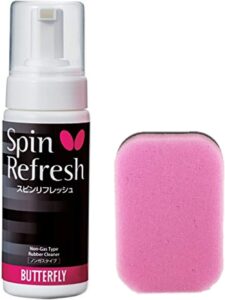
Major table tennis brands sell rubber cleaners, usually as a spray or foam, often in a kit with a cleaning sponge. They’re designed to remove grease without damaging the rubber, and a bottle lasts a long time.
If you don’t have a cleaner, plain water works well for routine cleaning. Some players add a tiny drop of mild dish soap for a greasy rubber, but if you do, wipe the rubber again with a cloth dampened with clean water so no soap residue is left behind.
What Not to Use on Your Paddle
Many household cleaning tricks will damage rubber. Avoid:
- Alcohol and solvents: rubbing alcohol, acetone and glass cleaners dry out the rubber and can dissolve the glue between the rubber and sponge.
- Magic erasers, abrasive sponges and baking soda: they work by gently sanding the surface, which removes the grippy top layer you’re trying to preserve.
- Soaking or running water: water can seep under the rubber edges and loosen the glue or swell the wooden blade.
- Paper towels and tissues: they leave lint on tacky rubbers.
- Heat: never use a hair dryer or leave the paddle in the sun to dry.
How to Clean Different Types of Rubber
| Rubber type | How to clean it |
|---|---|
| Inverted rubber (smooth, most common) | Damp sponge or cleaner, wipe in straight strokes, dry |
| Tacky rubber (sticky, often Chinese brands) | Water only or a cleaner made for tacky rubber; apply protective film after cleaning |
| Pimples-out rubber (short or long pips) | Use a soft toothbrush or brush to clean between the pimples, then wipe |
| Hard rubber or sandpaper paddles (cheap pre-made sets) | Wipe with a damp cloth; these surfaces don’t benefit from rubber cleaners |
How to Store a Ping Pong Paddle
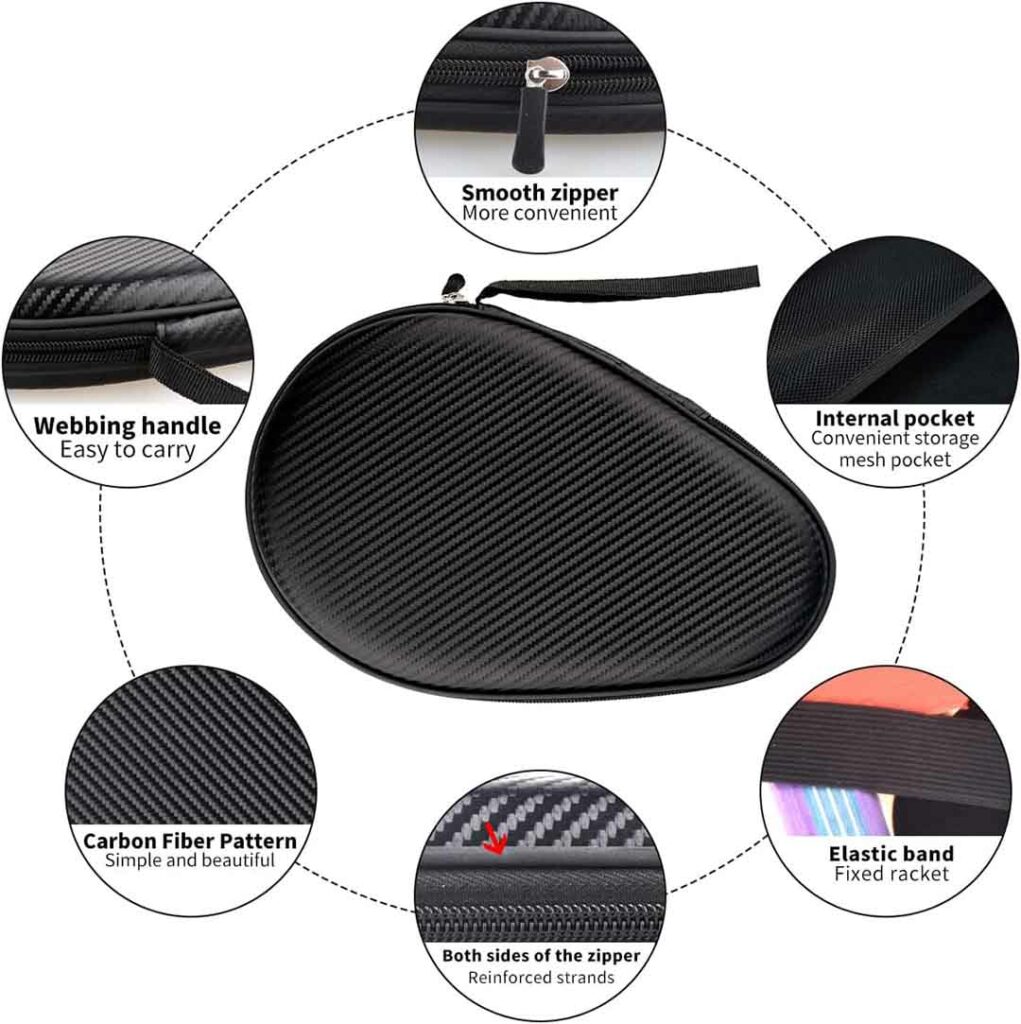
How you store your paddle matters as much as how you clean it. Rubber is sensitive to light, heat and air.
- Use a paddle case. A padded case protects the rubber from dust, light and knocks. Hard-shell cases offer the most protection.
- Use protective film. Self-adhesive rubber protection sheets stick to the rubber surface after cleaning and keep air and dust off. They’re especially useful for tacky rubbers.
- Keep it cool and dry. Never leave your paddle in a hot car, in direct sunlight or next to a radiator. Heat dries out rubber and can warp the blade.
- Don’t touch the rubber. Hold the paddle by the handle and avoid putting it face-down on tables or the floor.
Protect the Edges With Edge Tape
Sooner or later, every paddle gets hit against the table. Edge tape, a thin plastic or fabric strip around the edge of the blade, protects the wood and the rubber edges from chips and peeling. It adds a little weight, so some advanced players skip it, but it’s a good idea for beginners and anyone sharing paddles.
How Long Does Ping Pong Rubber Last?
Even with good care, rubber wears out. How long it lasts depends on how often you play:
- Casual players (once a week or less): rubber can last a year or more.
- Regular club players (two or three times a week): many replace their rubbers every three to six months.
- Competitive players: often replace rubbers every one to two months.
Signs that it’s time to replace your rubber:
- The ball slides off the surface instead of gripping, even after cleaning.
- The surface looks shiny or worn, especially in the center “sweet spot.”
- The rubber is cracked, chipped or peeling at the edges.
- Your serves and loops have noticeably less spin than before.
On most good paddles you can replace the rubber and keep the blade. On cheap pre-made paddles, it’s usually easier to replace the whole paddle. If you’re shopping for a new one, see our guide on how to choose a table tennis racket, or learn more about how the paddle has evolved in our history of table tennis.
Ping Pong Paddle Cleaning FAQ
Can you clean a ping pong paddle with water?
Yes. A sponge or microfiber cloth dampened with clean water is a safe way to clean most rubbers. Don’t soak the paddle or hold it under running water.
Can I use alcohol to clean my ping pong paddle?
No. Alcohol and other solvents dry out the rubber and can weaken the glue between the rubber and sponge.
How often should you clean your ping pong paddle?
Ideally after every session. A quick wipe takes less than a minute and keeps the rubber grippy for much longer.
How do you restore grip on a ping pong paddle?
Clean the rubber thoroughly with a rubber cleaner or water and let it dry. If it’s still slippery after cleaning, the rubber is worn out and should be replaced.
Should I put my paddle in a case?
Yes. A case protects the rubber from dust, light and heat, all of which shorten its life.